


Flower Care for the Most Popular Blooms
Choosing a bouquet to send to a loved one or falling in love with a stunning arrangement yourself is just the beginning of your flower journey. Once you bring these blooms home, you will want to make sure they stay alive and thrive for as long as possible. While our flowers are top-notch and have been proven to last, there are still a few steps to take and tips to consider for extending the life of your floral arrangements. From general flower care tips to the specific needs of popular blooms, this flower care guide covers it all.

chrysanthemums
Room temperature water, indirect sunlight, water every three days
Full Care Instructions

hydrangeas
Cool or room temperature water, no direct sunlight, water every one or two days
Full Care Instructions

orchids
Room temperature water, indirect sunlight, water daily, trim stems every two to four days
Full Care Instructions

sunflowers
Cool or room temperature water, direct sunlight, water every two or three days
Full Care Instructions
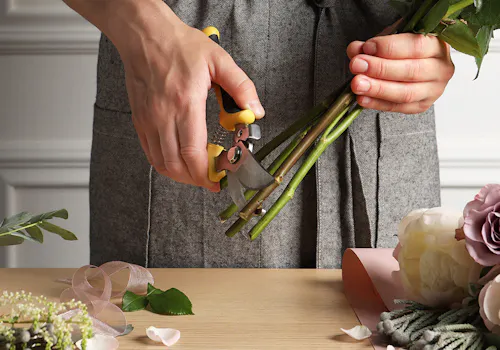
Cutting the Stems
If you purchased a wrapped bouquet, your flowers will surely be thirsty and in need of a big drink. One of the first things to do is to trim the stems to promote optimal water absorption. Cutting the stems of your flowers at a 45-degree angle will help open the line for water intake. Making a new cut at an angle will also ensure the stem does not sit flush against the vase, providing more surface area to soak up water.
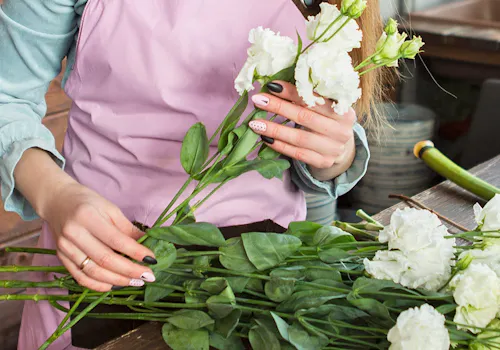
Removing Leaves and Low Foliage
After trimming the stems of your flowers, you will want to remove any leaves and foliage that will drop below the waterline in your vase. Foliage and leaves that become submerged in water will often promote the growth of bacteria that could prematurely kill or wilt the blooms. If your water begins to look cloudy or smell, you may have bacterial buildup. Don't panic! Simply remove the flowers, wash off the stems, clean the vase, and refill it with clean water.
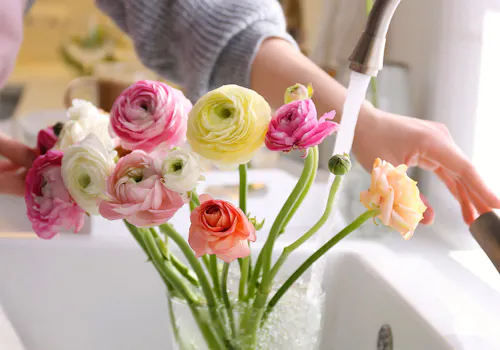
Filling a Vase
As a general rule of thumb, filling a vase with lukewarm water that feels cool as droplets but warm to the touch is best for fresh blooms. This is due to the speed of the water molecules, as they move more slowly in cold water and faster in warm water.
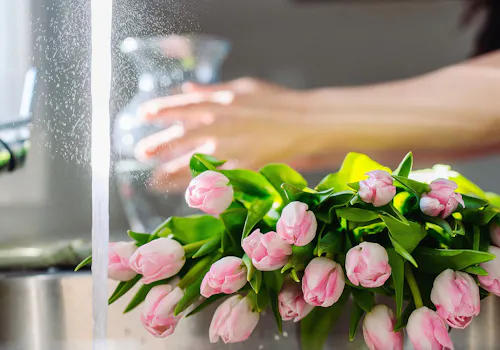
Checking Water Levels
Once your flowers are beautifully arranged in their vase, often by your favorite local florist, it's time to keep an eye on the water level. If delivered, give your flowers a fresh drink of cool water after their travels! Then, change the vase water as often as possible, typically every other day is recommended for most floral arrangements. Clean water is key to enhancing the quality and longevity of your flowers.
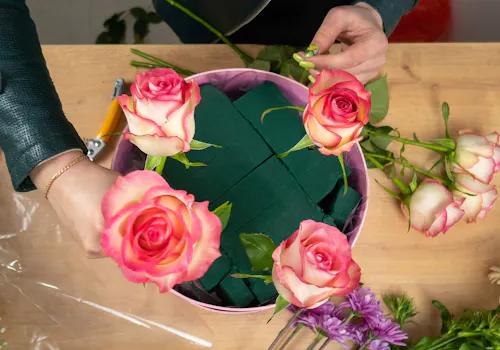
Caring for Floral Foam Arrangements
If your arrangement has been created with floral foam, check that the foam remains thoroughly saturated, especially upon arrival. Whenever it's time to add fresh water to the floral foam, usually every few days, always use a protective barrier between the design and the table. Gently pour water as close to the stems as possible, into the foam, to keep the stems hydrated and happy.
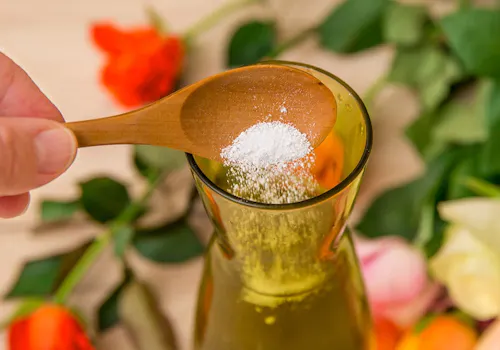
Feeding Your Flowers
If your flowers come with a packet of flower food, or if your local florist sells this, it is important to nourish your arrangements with these key nutrients. Most flower food contains carbohydrates to aid in cell metabolism, acidifiers to ensure the water pH is where it should be, and biocides to help decrease the growth of bacteria.
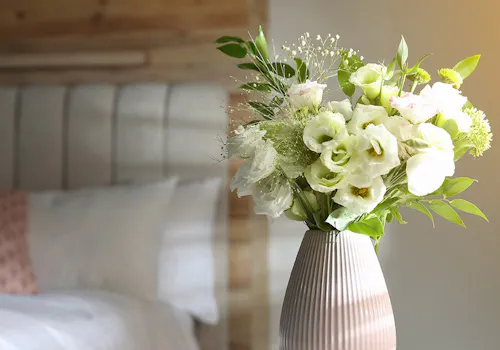
Knowing Where to Display Your Arrangement
After your flowers have been trimmed, arranged in their vase, hydrated, and fed, it is time to choose the best spot in your home to display this stunning bouquet. Be sure to familiarize yourself with the sunlight needs of your flowers. Will they bloom best in warm, direct sunlight, or do they require indirect sunlight and cool temperatures?
You will also want to take furry friends and pets into consideration. Some curious cats and playful puppies can make a mess of your flowers if they get too close, steal a nibble from their petals, or knock the vase over. It is best to make sure that the flowers you bring home or keep in reach of your cats and dogs are nontoxic to pets. We always recommend displaying your flower arrangements on a shelf away from your furry friends.